Most rubbish removal companies in the UK can take everyday household and business waste without any issue. But there are several categories they typically won’t collect because they’re classed as hazardous, pressurised, or require specialist permits and handling. Knowing these exceptions helps you stay safe, avoid surprise refusals, and get the right disposal route first time.
Below are five of the most common “not accepted” items—asbestos, car tyres, chemical liquids, gas cylinders, and paint/solvents—including why they’re restricted and what you should do instead. We’ve also linked to official guidance so you can double-check local rules.
1) Asbestos
Why most collectors won’t take it:
Asbestos is a dangerous substance when fibres become airborne and inhaled. Handling and transport require specific training, PPE, packaging, labelling and (in many cases) licensed contractors. General rubbish teams are not equipped or permitted to manage these risks on ad-hoc collections. The UK Health and Safety Executive (HSE) stresses controlled methods for any work that may disturb asbestos, and GOV.UK provides public health information on risks and what to do if you find it. HSE+2HSE+2
What to do instead:
Contact your local council or a licensed asbestos contractor. Many councils offer limited asbestos acceptance at household reuse and recycling centres (RRRCs) by appointment, or they’ll signpost you to approved services. Always follow the guidance on double-bagging and labelling, and never break asbestos sheets to “make them smaller”—that dramatically increases fibre release. Norfolk County Council
2) Car tyres
Why most collectors won’t take them:
End-of-life tyres are regulated waste. Safe storage, transport and treatment are tightly controlled to prevent fires and pollution. Operators need specific permits (or must use permitted third-party facilities) to sort, shred, or retread tyres. Because of this extra compliance burden, many general rubbish companies exclude tyres from standard collections. GOV.UK+1
What to do instead:
Ask your tyre retailer to take back old tyres when you buy replacements, or take them to a council site that accepts limited numbers for a fee. Some recycling centres allow a small quantity from domestic vehicles; charges and limits vary locally. Derbyshire County Council
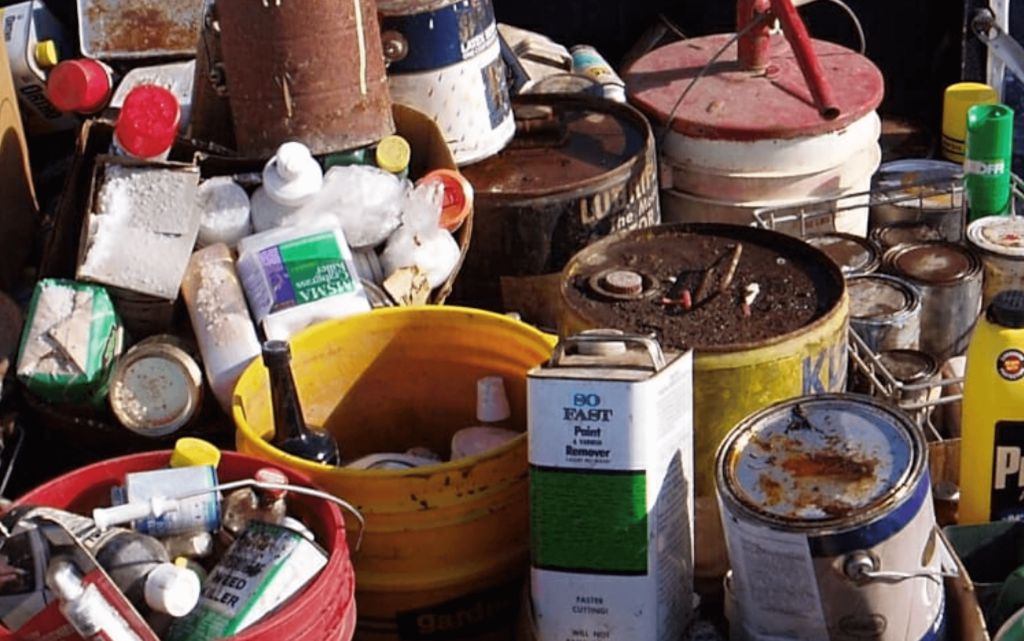
3) Chemical liquids (e.g., oils, fuels, pesticides, acids, cleaning agents)
Why most collectors won’t take them:
Liquid chemicals are often flammable, corrosive, toxic, or reactive. They need secure containers, segregation, and specialist storage to prevent leaks, fire and contamination. The Environment Agency’s “appropriate measures” for chemical waste spell out strict requirements for handling and containment that ordinary rubbish rounds can’t meet. Even “household” chemicals can be hazardous at disposal. GOV.UK
What to do instead:
Use your council’s hazardous-waste service or RRRC. Many accept small quantities of household chemicals, oils and fuels with caps and labels intact; for larger volumes you’ll be directed to a specialist contractor. Never pour chemicals down drains—this is illegal and dangerous. Derbyshire County Council+1
4) Gas cylinders and pressurised canisters (including BBQ propane, camping gas, disposable “NOS” canisters)
Why most collectors won’t take them:
Even “empty” cylinders can retain pressurised gas. Crushing in a compactor truck can cause explosions or fires. Because cylinders are reusable or require controlled depressurisation and recycling, they must go through manufacturer take-back schemes or licensed facilities. Councils and street services regularly warn against placing canisters in general or mixed recycling. cleanstreets.westminster.gov.uk+1
What to do instead:
Return cylinders to the supplier or gas brand (Calor, Campingaz, etc.) via their deposit/return scheme, or take them to a site that explicitly accepts gas bottles. Never put cylinders in your wheeled bin or skip. Check your council’s list of accepted items first. Bexley Council
5) Paint and solvents (including part-full tins of emulsion, gloss, thinners)
Why most collectors won’t take them:
Liquid paint and many solvents are classed as hazardous or problematic at disposal and can leak in transit. They need controlled handling and cannot go in general waste or co-mingled recycling. Some areas operate special drop-offs for small quantities; others require a hazardous-waste booking. Safe Environment
What to do instead:
If it’s water-based emulsion, many councils advise solidifying the leftovers (leave the lid off or mix in cat litter/sawdust) before disposing of the solidified residue as general waste and the empty, dry tin as scrap metal—but only if your council explicitly permits this. For solvent-based products and thinners, use your council’s hazardous-waste route. Always check local rules first as acceptance criteria differ. Derbyshire County Council
“Grey area” items: what about batteries, oils, and electricals?
These are commonly refused by kerbside rubbish collectors but accepted through alternative channels:
- Batteries (including lithium)—take to supermarket drop-off points or council battery collections; they’re a known fire risk in trucks and MRFs. Isle of Wight Council
- Engine/DIY oils—usually accepted in limited quantities at recycling centres; keep liquids in their original containers with lids. Derbyshire County Council
- WEEE (electricals, fridges, TVs)—use council bulky-waste bookings, bring sites, or retailer take-back schemes; refrigerants and components require controlled processing. (Local acceptance lists vary, so always check your council’s page.) Bexley Council
Why the rules vary (and why contractors say “no”)
Waste firms must follow permits and duty-of-care laws that dictate what they can carry, how it’s packaged, and where it goes. Hazardous or specialist streams need the right permits, transfer notes, segregation and end-destinations. Collectors who don’t hold those permissions will refuse restricted items to remain compliant and keep staff, the public and facilities safe. The Environment Agency publishes the permitting framework and updates it periodically. GOV.UK
Local councils also publish “what we don’t collect” lists for bulky or household waste. These often include asbestos, chemicals, tyres, gas bottles, and paint, with signposts to correct disposal routes—use these pages as your first point of reference before you book a collection or head to a tip. Barking and Dagenham
Quick checklist before you book
- Identify the material precisely (e.g., “cement-bonded asbestos,” “BBQ propane cylinder,” “lithium battery,” “solvent-based paint”).
- Check your council’s acceptance list and booking rules for hazardous items and DIY limits. Barking and Dagenham+1
- For restricted items, use specialist routes (licensed contractors, retailer take-back, manufacturer return schemes). GOV.UK+1
- Never hide restricted items in general waste—this risks fires, contamination, fines, or collections being refused. GOV.UK
References & useful sources
- Health and Safety Executive (HSE) — Asbestos: overview & safe working. (Updated 2024). HSE+1
- UK Health Security Agency/GOV.UK — Asbestos: general information for the public (May 15, 2025). GOV.UK
- Environment Agency — Waste environmental permits (last updated July 24, 2025). GOV.UK
- Environment Agency — End-of-life tyres: storage and treatment standard rules. GOV.UK+1
- Westminster City (Clean Streets) — Dangers of disposing gas canisters incorrectly. cleanstreets.westminster.gov.uk
- Asbestos Recycling – Rubbish Removal UK study via Slideshare
- Commercial Recycling — Guide to gas bottle disposal. commercialrecycling.co.uk
- Derbyshire County Council — What we can and can’t accept at recycling centres (chemicals/limits). Derbyshire County Council
- London Borough of Barking & Dagenham — Bulky waste: what we don’t collect (examples: tyres, gas bottles, chemicals, asbestos, paint, oils). Barking and Dagenham
- London Borough of Bexley — Hazardous or dangerous waste (examples and routes, incl. gas bottles, batteries, oil). Bexley Council
- Safe-Environment — Items not allowed in general waste (paints, solvents, asbestos, chemicals). Safe Environment